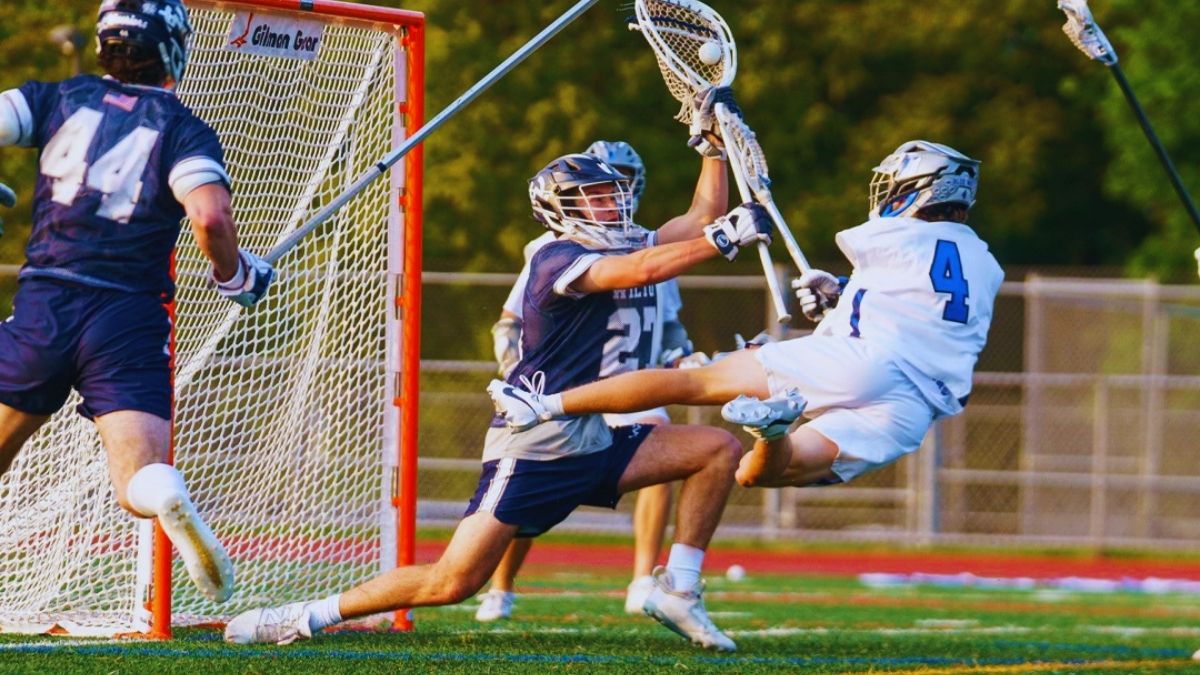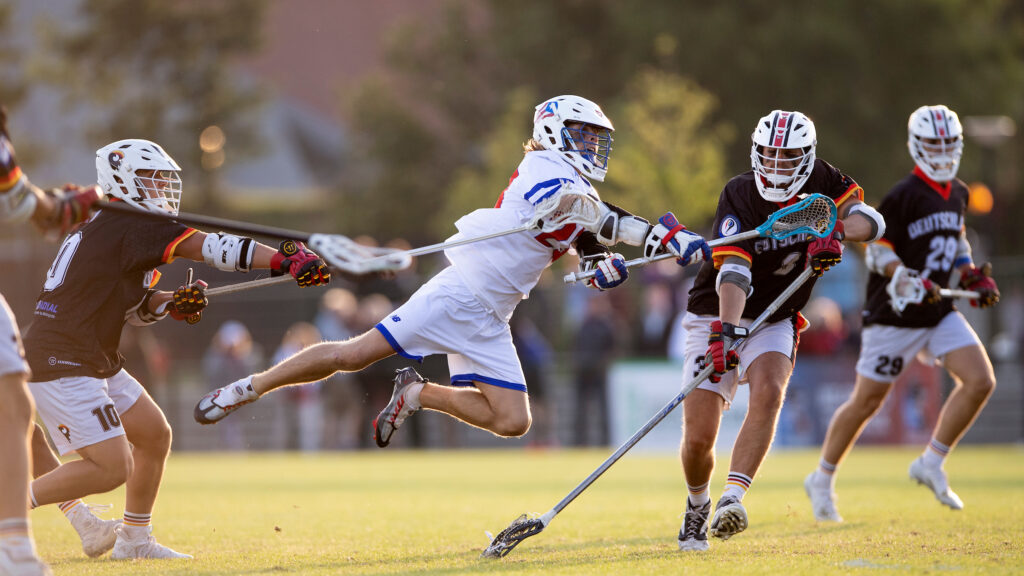
Lacrosse looks like controlled chaos until the pattern clicks.
The ball moves fast. Players cut through space. Sticks flash in the air. One second, the offense is behind the goal. The next, a pass hits a cutter in stride and the shot is already in the net. For a new fan, parent, or beginner athlete, it can feel like the game skipped the instruction manual.
That is exactly why this guide exists.
What Is Lacrosse Sport? Lacrosse is a fast team sport where players use a long-handled stick with a netted pocket to carry, pass, catch, and shoot a small rubber ball into the opponent’s goal. It blends speed, hand-eye coordination, contact, strategy, and one of the deepest cultural histories in North American sport.
Key Takeaways
- Lacrosse is a stick-and-ball team sport built around passing, catching, shooting, defense, and quick decisions.
- The sport has Indigenous roots and is often known as the Creator’s Game.
- Beginners should learn the positions, basic rules, equipment, field layout, and safe checking first.
- Lacrosse culture connects performance, resilience, confidence, and identity on and off the field.
What Is Lacrosse Sport in Simple Terms?
Lacrosse is a team game where players use sticks to move a ball down the field and score by shooting into a goal.
Think of it as a sport with soccer’s spacing, hockey’s speed, basketball’s off-ball movement, and football’s physical edge. That does not mean lacrosse is a copy of those sports. It has its own rhythm. Once the ball is in the stick, the player has to run, protect it, read defenders, and make the next decision in a hurry.
That is what makes lacrosse exciting for youth athletes and new fans. It is not just about being big or fast. The best players think quickly, move with purpose, and stay calm when pressure arrives.
A strong beginner lacrosse guide should answer four questions right away:
- What is the goal of the game?
- How do players move the ball?
- What are the main positions?
- What rules keep the game safe and fair?
The goal is simple: score more than the other team. The challenge is everything that happens before the shot.
How Does Lacrosse Work?
Lacrosse starts with possession. A team can win the ball through a faceoff, a save, a turnover, a ground ball, or a restart. Once a team has possession, players move the ball by passing it or cradling it.
Cradling is the rocking motion players use to keep the ball in the stick pocket while running. Beginners often think the pocket simply holds the ball in place. It does not. The player has to control it while sprinting, dodging, and handling pressure.
That is where lacrosse becomes a skill sport.
The offense tries to create space. The defense tries to take space away. The goalie reads the play, tracks shots, and organizes the defense. Good teams do not just run around. They communicate, rotate, cut, feed, and reset.
Lacrosse rewards athletes who can do three things at once: move their feet, protect the ball, and make smart decisions.
What Are the Main Lacrosse Positions?
Most beginners learn four core lacrosse positions first: attack, midfield, defense, and goalie.
Attack
Attack players are the main scoring threats. They usually stay near the opponent’s goal and look for shots, feeds, and quick cuts. A good attack player does not just shoot. They create chances for teammates too.
Midfield
Midfielders play both offense and defense. They run the most, transition the ball, and often decide the tempo of the game. If attack is the spark and defense is the wall, midfield is the engine.
Defense
Defense players protect the goal area and try to stop the other team from getting clean shots. Great defenders use footwork before stick checks. They guide attackers into bad angles and force rushed decisions.
Goalie
The goalie is the last line of defense. This position takes courage, focus, and a short memory. A goalie may give up a goal and have to make a save seconds later. That is why the goalie mindset is such a strong part of lacrosse culture.
Lacrosse Rules and Regulations for Beginners
Lacrosse rules and regulations can seem complicated at first, but beginners only need the foundation.
Players use their sticks to pass, catch, carry, and shoot. Defensive players can check opponents within specific rules. Fouls happen when contact becomes unsafe, illegal, or unfair.
The game usually includes:
- Possession changes
- Faceoffs or draws
- Boundaries
- Penalties
- Crease rules
- Legal and illegal checking
- Substitutions
- Shot attempts
- Goal scoring
World Lacrosse is the international governing body responsible for rules across men’s field, women’s field, box, and Sixes lacrosse, while USA Lacrosse supports rules, safety, education, and athlete development in the United States.
The most important beginner rule is simple: control matters. A player must control the stick, the body, and the contact. Wild swings, hits to the head, pushes from behind, and dangerous checks do not belong in the game.
Basic Lacrosse Gameplay Guide
Here is the clean version of how lacrosse works during live play:
- The game begins or restarts with a faceoff, draw, clear, save, or official whistle.
- The team with the ball moves it by passing or cradling.
- Offensive players dodge, cut, screen, and feed to create shooting chances.
- Defensive players use positioning, communication, and legal checks to force mistakes.
- A goal counts when the ball fully crosses into the opponent’s net.
One detail surprises many new fans: in field lacrosse, players can move behind the goal. That space is often called “X.” Smart offenses use it to feed cutters, dodge from behind, or make the goalie turn and reset.
That one rule changes the whole feel of the sport. The goal is not the back wall. It is part of a 360-degree attack.
Lacrosse Positions, Roles, and Beginner Cues
Position | Main Job | Simple Cue | Common Beginner Mistake |
Attack | Create and finish scoring chances | Move after every pass | Waiting still near the goal |
Midfield | Connect offense and defense | Run both ways | Forgetting defensive responsibility |
Defense | Stop dodges and protect the crease | Feet first, stick second | Swinging instead of staying balanced |
Goalie | Save shots and lead communication | Track the ball, talk early | Staying quiet under pressure |
Faceoff Specialist | Win possession | Stay low and react fast | Lunging without control |
This is where many beginners improve quickly. Once they know their job, the game stops looking random.
What Equipment Do You Need for Lacrosse?
Lacrosse equipment depends on the format, age level, gender, and league rules. Still, most players start with the same basic categories.
Common lacrosse equipment includes:
- Lacrosse stick
- Lacrosse ball
- Helmet for boys’ and men’s field lacrosse
- Gloves
- Shoulder pads
- Elbow pads
- Mouthguard
- Cleats
- Protective eyewear in many girls’ and women’s formats
- Goalie-specific protection
A lacrosse stick has a shaft, head, mesh or strings, pocket, and butt end. The pocket matters because it affects throwing, catching, cradling, and shooting. If the pocket is too deep for the rules, the stick may be illegal.
For parents buying best lacrosse gear for beginners, fit should come before flash. The right gear should help the athlete move, breathe, see, and play safely. A helmet that pinches, gloves that slide, or cleats that do not grip can turn practice into a struggle.
Comfort builds confidence. Confidence keeps athletes engaged.
Field Lacrosse, Box Lacrosse, and Lacrosse Sixes
Lacrosse has several formats, and each one has a different feel.
Field Lacrosse
Field lacrosse is played outdoors with more space and longer transitions. It is the version many high school and college fans recognize first.
Box Lacrosse
Box lacrosse is usually played indoors in a smaller, tighter space. It is faster in close quarters and places a premium on quick passing, tough defense, and accurate shooting.
Women’s Lacrosse and Men’s Lacrosse
Women’s lacrosse and men’s lacrosse have different rules, equipment standards, and contact levels. Both require speed, skill, awareness, and discipline.
Lacrosse Sixes
Lacrosse Sixes is a faster, smaller-sided format designed for speed and constant action. LA28 states that lacrosse will feature the Sixes format at the 2028 Olympic Games, with teams using six players and a high-tempo structure.
That Olympic spotlight matters because it gives new fans a simpler entry point. Sixes is quick to understand, exciting to watch, and built for modern sports audiences.
History of Lacrosse Game: Why the Roots Matter
The history of lacrosse game reaches far beyond modern leagues, highlight reels, and tournament weekends.
World Lacrosse traces the sport’s origins to Indigenous peoples of North America, with versions of the game played as early as the 12th century. These early forms were not casual recreation only. They carried cultural, spiritual, and community meaning.
That is why lacrosse is often called the Creator’s Game.
For many Indigenous communities, lacrosse has been tied to healing, identity, preparation, and connection. The Haudenosaunee Nationals remain central to that story, representing a living link between the sport’s roots and its future.
This part of lacrosse should be handled with respect. It is not a decorative backstory. It is the foundation.
Modern lacrosse has grown through youth lacrosse, college lacrosse, professional lacrosse, the Premier Lacrosse League, the National Lacrosse League, and international competition. World Lacrosse currently lists 97 members across four continental federations, which shows how far the sport’s reach has expanded.
Is Lacrosse Hard to Learn?
Lacrosse is not hard to start, but it takes time to feel smooth.
The first challenge is catching and throwing. New players often chase the ball, scoop too softly, or throw with only their arms. Then the small skills begin to connect. The hands relax. The feet keep moving. The player learns to pass before pressure arrives.
A beginner should focus on five core skills:
- Wall ball for throwing and catching
- Ground balls with proper scooping form
- Cradling while moving
- Defensive footwork
- Simple passing under pressure
The best part? Improvement is easy to feel. A player who drops ten passes on Monday might catch six clean ones by Friday. Lacrosse gives beginners small wins early if they practice with purpose.
What Most People Get Wrong About Lacrosse
The biggest misunderstanding is that lacrosse is just players “whacking each other with sticks.”
That view misses the game completely.
Lacrosse is physical, but smart play beats reckless play. A strong defender wins with angle and timing. A great midfielder reads the field before sprinting. A skilled attack player knows when not to shoot.
Do this, not that:
- Do move after passing. Do not stand and watch.
- Do scoop through ground balls. Do not stab at them.
- Do defend with your feet. Do not reach first.
- Do learn legal checking. Do not swing wildly.
- Do respect the sport’s roots. Do not treat the history like trivia.
Jim Valvano famously said, “Don’t give up. Don’t ever give up.” That line fits lacrosse because the sport constantly asks players to reset after mistakes. A dropped pass, missed shot, or lost matchup is not the end of the play. It is a lesson with a whistle attached.
Lacrosse Culture and the Athlete Mindset
Lacrosse culture has always carried a strong sense of identity.
There is the player hitting the wall before school. The goalie walking back into the cage after a rough quarter. The midfielder running one more sprint when the lungs say, “Absolutely not.” The defender celebrating a forced turnover like a goal.
That is why athlete mindset matters so much in this sport. Lacrosse teaches players to stay sharp under pressure, trust teammates, and keep their body language strong when the game gets messy.
It also explains why lacrosse lifestyle apparel has become part of the culture. Players wear the sport beyond the field because the game becomes part of how they see themselves. Hoodies, hats, tees, and performance-inspired gear are not only about fashion. They are tied to road trips, cold practices, tournament mornings, team photos, and the quiet confidence athletes carry into the next challenge.
Conclusion: What Is Lacrosse Sport Really About?
What is lacrosse sport when the stick checks, goals, and fast breaks are stripped down?
It is a game of control under pressure. It asks players to move quickly, think clearly, communicate loudly, and recover fast. It honors a deep Indigenous history while continuing to grow through youth programs, school teams, college competition, professional leagues, and the Olympic stage.
For beginners, the path is simple. Learn the rules. Respect the roots. Get the right gear. Practice the basics. Stay coachable.
Lacrosse does not demand perfection from day one. It asks for effort, awareness, and the nerve to keep moving after the ball hits the grass.
That is the real beauty of the sport.
Ready to carry the lacrosse mindset beyond the final whistle? Explore athlete-inspired apparel from Subzero Lacrosse Company, built for players who live the game on and off the field. For questions or custom gear, email Subzerolaxco@gmail.com.
FAQ
What is lacrosse sport?
Lacrosse is a team sport where players use a netted stick to move a small ball and score by shooting it into the opponent’s goal.
How do you play lacrosse?
Players pass, catch, cradle, dodge, defend, and shoot. The team that scores more goals wins.
What are the rules of lacrosse?
Basic rules cover legal checking, possession, boundaries, crease play, penalties, substitutions, and scoring. Rules vary by format and level.
Is lacrosse hard to learn?
Lacrosse can feel fast at first, but beginners improve quickly by practicing wall ball, ground balls, cradling, footwork, and simple passing.
What equipment do you need for lacrosse?
Most players need a stick, ball, mouthguard, cleats, and required protective gear such as a helmet, gloves, pads, or eyewear depending on the format.
What is lacrosse sixes?
Lacrosse Sixes is a faster, smaller-sided version of lacrosse designed for quick play, constant movement, and high scoring.
Why is lacrosse called the Creator’s Game?
Lacrosse is called the Creator’s Game because of its deep Indigenous roots and spiritual meaning in many Native communities.
What is the best lacrosse gear for beginners?
The best beginner gear fits well, meets league safety rules, feels comfortable, and helps the player move confidently.
What makes a good lacrosse hoodie?
A good lacrosse hoodie should feel comfortable, hold up through practice days and travel, and match the athlete’s lifestyle on and off the field.
Is premium lacrosse streetwear only for players?
No. Lacrosse lifestyle apparel can fit players, parents, fans, coaches, and anyone connected to the sport’s culture.